

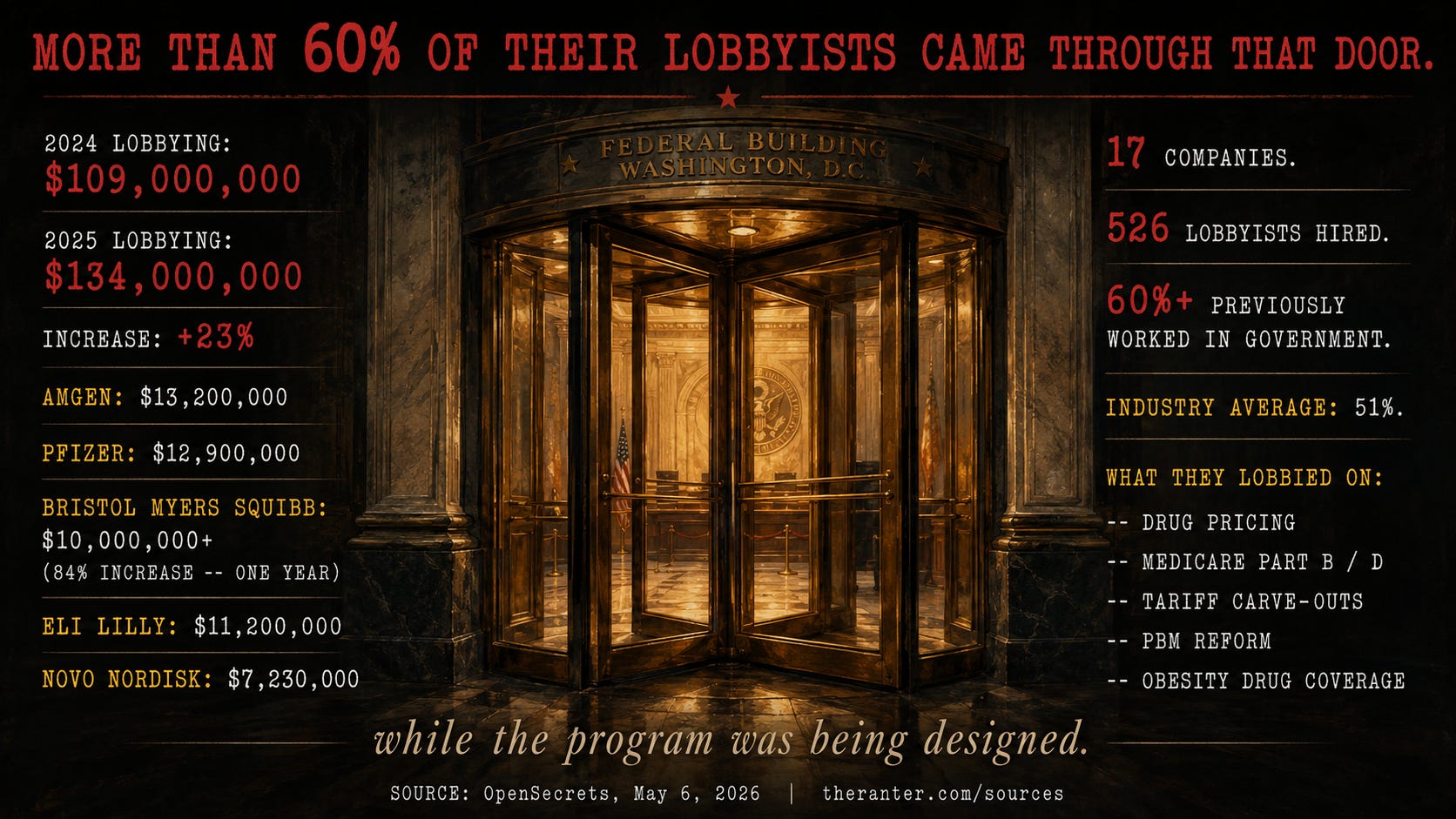
Drug companies involved in TrumpRx, the Trump administration’s new direct-to-consumer prescription discount program, increased their federal lobbying by 23 percent in the period before the program launched.
They lobbied while the program was being built.
That distinction matters. When a company lobbies to kill a bill, you can track which senators they called and how much they spent. When a company lobbies while an executive program is being designed, you are watching a different move. You are not fighting the regulation. You are writing it.
TrumpRx launched as a way for patients to access lower prescription prices directly through participating manufacturers. The president announced it. The companies stood behind it. The framing was clean: the administration delivered, the industry cooperated, patients would save.
Here is the part that didn’t make the announcement. The administration used tariff threats on imported patented drugs as leverage to bring companies to the table. An April 2 presidential proclamation imposed a 100 percent tariff on imported patented drugs from countries without a qualifying security agreement. TrumpRx participants got the carve-out: a 0 percent tariff rate through January 20, 2029. So the companies participated.
The discounts are real, and for the headline drugs, modest. GLP-1s that listed above a thousand dollars run $150 to $350 through the program. The companies were already selling the popular weight-loss GLP-1s direct to cash-paying patients at around $499 a month, so TrumpRx knocked that down another notch. What the companies got in return was bigger: a tariff exemption worth billions and a presidential endorsement.
And while they were at the table deciding whether to participate, they spent nearly $134 million on federal lobbying in 2025, up from $109 million in 2024. That is the 23 percent.
Think about what that means. These companies were being pressured into a program by one arm of the administration. They were lobbying the same administration with the other. The pressure and the access ran simultaneously. What came out the other end, which drugs got included, at what discount, under what terms, reflects both forces. The patient gets the coupon. The negotiation happened in a room they weren’t in.
Here is what the lobbying was for. The 17 companies in the OpenSecrets analysis were working the same policy levers TrumpRx sits on: drug pricing, Medicare Part B and D reimbursement, PBM reform bills, tariff carve-outs, obesity drug coverage. They were lobbying the specific terrain this program was being built on.
More than 60 percent of the 526 lobbyists these companies hired previously worked in government. The 51 percent industry average is itself the floor.
This pattern predates the current administration by a long way. The Non-Interference Clause, the provision that bars Medicare from directly negotiating drug prices, was a Republican project signed in 2003. Democrats campaigned against it for years while accepting pharma contributions every cycle. The Inflation Reduction Act, passed in 2022, added limited negotiation authority on a small set of drugs. The industry lobbied hard against it. After it passed, the lobbying shifted downstream to shaping the implementation rules. The pharma and health products sector spent a record $457 million on federal lobbying in 2025 alone.
The lobbying doesn’t stop when the vote happens. It moves to wherever the next decision point is.
TrumpRx is a new decision point. It is an executive program, not legislation. The design happens in conversations, not committee hearings. Those conversations are not subject to the same disclosure rules as a legislative markup. The companies being pressured into the program were also lobbying the program’s design. Whether that shaped which drugs got included, how deep the discounts run, or which cost structures stayed off the table is not in the announcement.
The patient sees the headline. The deal was made before it.
Related episode: The Cure Heist
THE RANTER follows the money through the systems that bill you: healthcare, housing, food, labor, debt, political money. Mechanism over motive.
Newsletter: newsletter.theranter.com | Website: theranter.com
YouTube: @TheRanterOfficial | Instagram: @theranterofficial | TikTok: @theranterofficial | X: @RanterMarkus | Bluesky: @rantermarkus.bsky.social
Every figure above is sourced and linked. Think one is wrong? corrections@theranter.com