

Tennessee passed a law this spring saying the company that decides which drugs your insurance covers cannot also own the pharmacy that fills them. Within weeks, two of the biggest sued to keep both.
The law is the FAIR Rx Act, signed by Governor Bill Lee in May. It bars one company from owning both a pharmacy and the PBM-and-insurer that decides what the pharmacy dispenses, once its stake in each tops 5 percent. A pharmacy benefit manager, a PBM, is the middle layer between your insurer and the drugstore. It builds the list of drugs your plan covers, sets what you pay, and routes where you fill the script. The three biggest handle nearly 80 percent of the prescriptions in the country. The ban takes effect in 2028.
CVS sued first, in May, arguing the law discriminates against large out-of-state companies. CVS says it would have to close 136 pharmacies in Tennessee and stop mail-order service in the state. Then on June 12, Express Scripts, the PBM owned by Cigna, filed its own complaint. Under the law it would have to give up Accredo, its specialty pharmacy in Memphis. It told the court its Tennessee pharmacies employ about 1,200 people and filled prescriptions for more than 32,000 residents last year, and that the law would close pharmacies, strand rural patients, and interrupt people mid-treatment, including fertility patients and military families who use its mail-order service.
Read who passed it. A Republican state senator, Bobby Harshbarger, wrote the Senate bill. A Republican governor signed it. And it cleared the legislature 24 to 9 in the Senate and 86 to 7 in the House. PBM extraction is one of the few fights both parties actually pick. Arkansas banned PBM-owned pharmacies outright last year, and a court has paused that one. Kentucky, Michigan, and West Virginia went at spread pricing, steering, and transparency. The actions cross both parties, and they keep coming because the federal fix stopped short of this. Congress did pass PBM reform in February, rebate pass-through and transparency. It left the ownership question alone, the exact thing Tennessee just reached for.
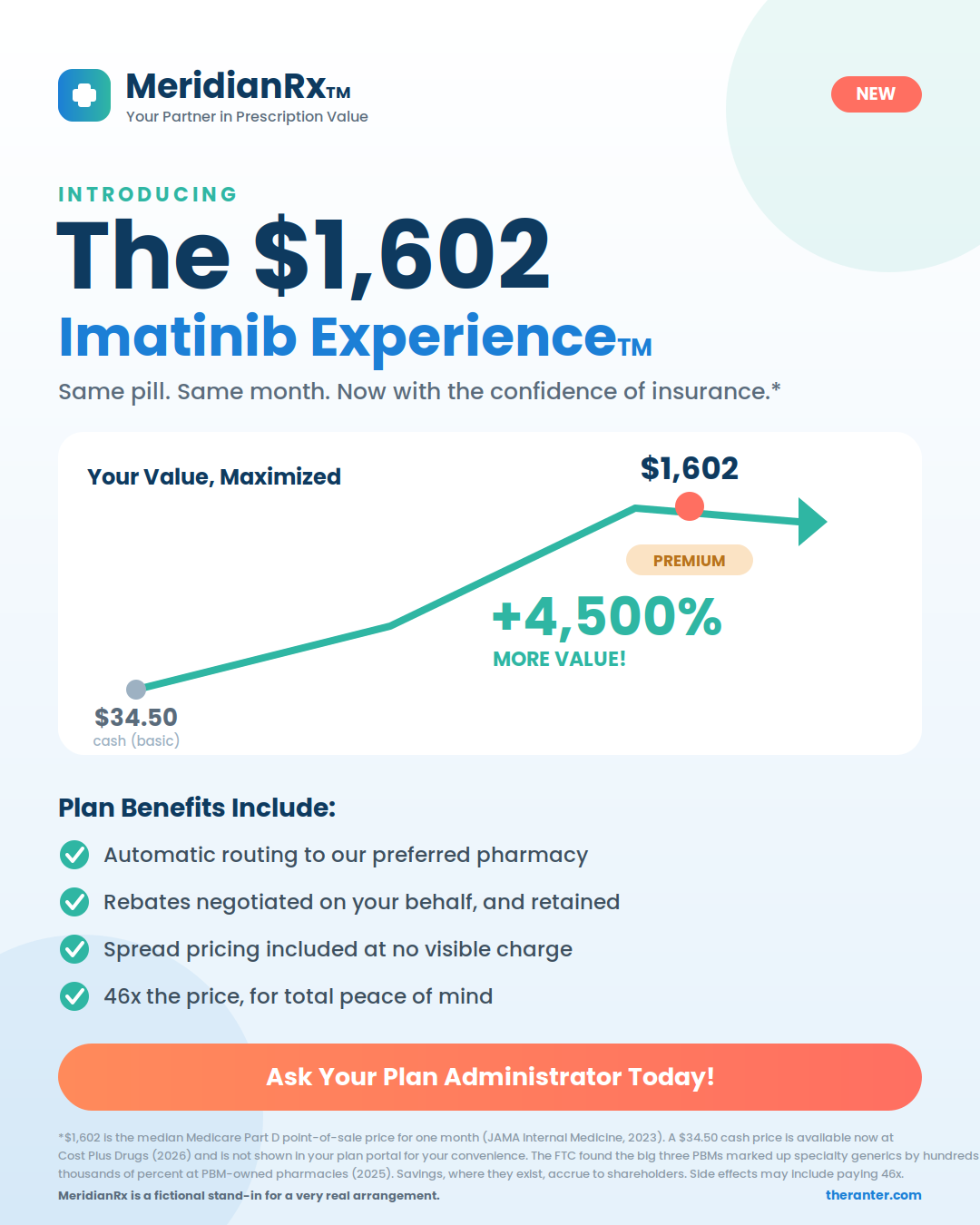
The PBM was sold to America as the thing that would negotiate prices down. Then it bought the pharmacies. Now the same company picks the drug, sets your copay, and owns the counter where you fill it. It can route the prescription to the pharmacy it owns, bill the plan a price it sets, and keep the spread, the gap between what it bills the plan and what it pays the pharmacy. The FTC found the three biggest PBMs pulled more than 7.3 billion dollars in dispensing revenue above their own cost on specialty generics from 2017 to 2022, plus roughly 1.4 billion in spread pricing on those same drugs. This works without a villain. One company stands at the start of the transaction and the end of it, and the rules let it.
The companies will tell you integration creates savings. Watch where they land. The rebate is figured off the list price, so the middleman earns more as the sticker climbs. The margin the FTC measured turned into buybacks and shareholder return. Your copay stayed where it was. Whatever they are calling savings, it was never headed your way.
The lawsuit is clean for one reason. Read Express Scripts’ own complaint and the defense is real: split the company from the pharmacy and some pharmacies close, patients lose access, treatments get interrupted mid-course. That can be true. But look at where the threat comes from. The reason “you will hurt patients” is credible is that the middleman went and bought the pharmacies in the first place. The consolidation is the problem and the hostage at once. You build the chokepoint, then point at the people standing in it and say you cannot touch me without hurting them.
That is the design. No law is broken. A company is simply allowed to choose your drug and own the store that sells it to you. The patient is the leverage in a fight the patient never chose.
One thing you can actually do, today. Find out if your PBM and your pharmacy are the same company. CVS owns Caremark, UnitedHealth owns Optum Rx, and Express Scripts and Accredo are both Cigna. If your plan keeps nudging you toward one mail-order pharmacy, or your refill notice says your usual pharmacy is “no longer preferred,” that is usually why.
Then price-check one drug. Take a prescription you fill regularly and compare your insured price against the cash price at a pass-through pharmacy like Cost Plus Drugs, or the cash price at Amazon Pharmacy. People routinely find the cash price beats the insured price, which tells you the markup was never about your care.
And watch your own statehouse. The FAIR Rx Act is a template now, and the fight over it is live. Search your statehouse site for “pharmacy benefit manager” when the session opens. When a PBM ownership bill shows up, you will know what the lawsuit against it is really defending. Not the patient. The pharmacy it owns.
THE RANTER follows the money through the systems that bill you: healthcare, housing, food, labor, debt, political money. Mechanism over motive.
Newsletter: newsletter.theranter.com | Website: theranter.com
YouTube: @TheRanterOfficial | Instagram: @theranterofficial | TikTok: @theranterofficial | X: @RanterMarkus | Bluesky: @rantermarkus.bsky.social
Every figure above is sourced and linked. Think one is wrong? corrections@theranter.com