

In August 2015, Turing Pharmaceuticals bought the U.S. rights to Daraprim for $55 million. Within weeks, the price of a single pill went from $13.50 to $750. Martin Shkreli was 32 years old. Daraprim was the only FDA-approved treatment for toxoplasmosis, a parasitic infection that is life-threatening for pregnant women, infants, and patients with HIV or compromised immune systems. Patients who had been paying around $1,000 a year for a full course of treatment now faced bills in the tens of thousands.
The public reaction is the part everyone remembers. Shkreli smirked at a congressional hearing and took the Fifth. Hillary Clinton tweeted about the price gouging. Bernie Sanders called him a poster child of greed. The press branded him “the most hated man in America.” Vice built online video features around him. He bought the only copy of the Wu-Tang Clan album “Once Upon a Time in Shaolin” for $2 million and flaunted it.
The industry reaction is the part to watch.
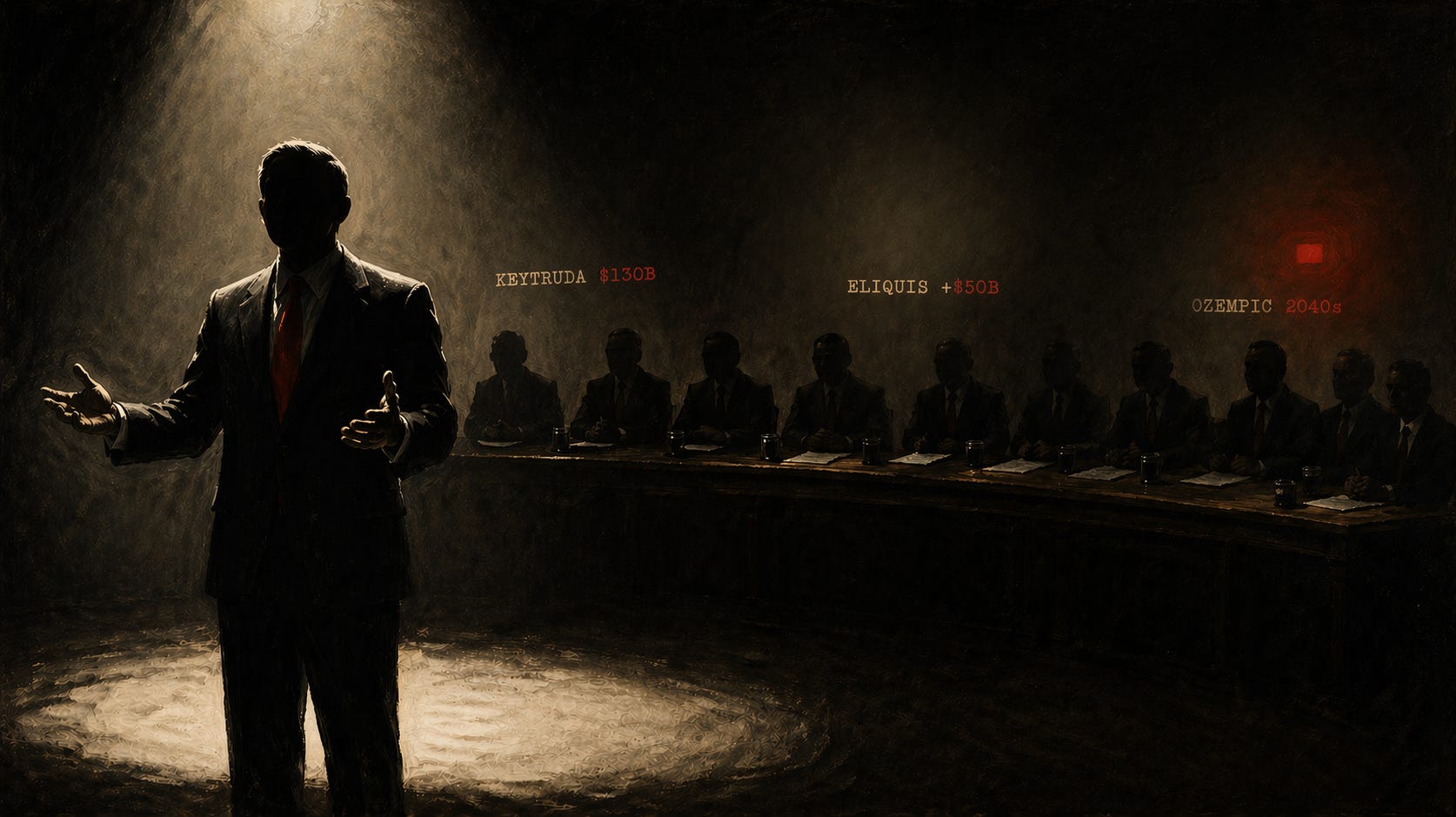
Every drug company in America had teams running some version of the Turing playbook. Acquiring older drugs without therapeutic alternatives. Raising prices on medications patients could not substitute or delay. Shkreli’s actual offense against the industry was not the price hike. It was the press conference. He said it out loud. He defended the calculus on cable television. He made the mechanism visible. Everybody with a pharma portfolio that month needed to make the mechanism invisible again fast, and the fastest way was to let Shkreli absorb all the public heat and continue quietly.
This worked. It worked very well. Shkreli served roughly four years in federal prison for securities fraud tied to old hedge funds he ran before Turing. He was released from FCI Allenwood Low in May 2022. The Daraprim scheme ran nearly five years and generated tens of millions in excess profits. Shkreli served zero days of prison time for it.
The industry took one lesson from 2016. Keep going. Stop smirking.
The 2026 boardroom
Merck’s Keytruda is the best-selling cancer drug in the world, with over $130 billion in cumulative revenue. Its core patents expire in 2028. At the J.P. Morgan Healthcare Conference in January 2025, CEO Rob Davis told investors Merck was accelerating a subcutaneous reformulation for end-of-year launch. Same compound, new delivery route, new patents. The exclusivity clock resets.
Bristol Myers Squibb and Pfizer extended Eliquis through patent term extension at the U.S. Patent and Trademark Office, then stacked follow-on patents for minor modifications on top. The extension is projected to collect over $50 billion in U.S. revenue that would otherwise have faced generics. Medicare Part D alone spent $16.4 billion on Eliquis in the 12-month window ending May 2023.
Novo Nordisk’s Ozempic files the longest runway. The core semaglutide compound patents date to the mid-2000s with standard 20-year terms. Novo has layered dozens of follow-on patents on top, covering formulations, delivery methods, and manufacturing processes, extending U.S. protection into the 2040s. In October 2024, Novo settled patent challenges with the generic manufacturer Mylan on confidential terms. Whether generic entry arrives when the compound patent expires or only after the follow-on layers run out is not public. The compound is the same compound. The patent layer keeps growing.
None of these three companies raised a price overnight and dared Congress to stop them. They did not need to. They kept filing patents and kept the revenue flowing. The mechanisms are legal. The extraction is continuous. Between 2025 and 2030, roughly $300 billion in prescription drug revenue will lose patent exclusivity, about three times the size of the 2016 patent cliff. Instead of price competition, the response is reformulation, patent thicketing, M&A, and a new kind of deal.
The new kind of deal
Between September 30 and November 6, 2025, the Trump administration announced pricing agreements with Pfizer, AstraZeneca, EMD Serono, Eli Lilly, and Novo Nordisk. Ozempic and Wegovy list prices drop from $1,000 and $1,350 per month to $350 through TrumpRx, a government-run direct-to-consumer platform that launched in February 2026. Zepbound drops from $1,086 to an average of $346. NovoLog and Tresiba insulin get capped at $35 per month. The Biden Inflation Reduction Act capped Medicare insulin at $35 per month through legislation starting January 2023. The Trump deals hit similar targets through executive negotiation tied to most-favored-nation language.
What the drug companies got in exchange: Eli Lilly announced $27 billion in new U.S. manufacturing investments. Novo Nordisk committed $10 billion. Both received tariff relief on imported branded and patented drugs. Both got guaranteed MFN pricing written into all future medications they bring to market. Faster FDA regulatory review timelines were part of the package.
A price cap on specific drugs. A photograph in the Oval Office. Patent thickets remain legal. The reformulation loop remains legal. Orphan drug exclusivity is still on the books. The off-patent acquisition playbook that Shkreli ran was never outlawed.
Shkreli went to prison for being loud. The rest of the boardroom got a better deal for staying quiet.
The Shkreli decade and the MFN decade have yet to answer one question.
When the system works exactly the way it was designed to work, what is the citizen supposed to do about it?
Related episode: The Cure Heist: How Drugs Get Priced (EP02)
Related read: Why Paying $72,000 Made Money
THE RANTER follows the money through the systems that bill you: healthcare, housing, food, labor, debt, political money. Mechanism over motive.
Newsletter: newsletter.theranter.com | Website: theranter.com
YouTube: @TheRanterOfficial | Instagram: @theranterofficial | TikTok: @theranterofficial | X: @RanterMarkus | Bluesky: @rantermarkus.bsky.social
Every figure above is sourced and linked. Think one is wrong? corrections@theranter.com