

Same office, same chair, same doctor you have seen for three years. The front desk hands you the same clipboard. Nothing about the visit changed.
The bill says hospital. And under it, a line that was not there last time. A facility fee.
Nobody warned you. No sign on the door, no heads-up at the desk, nothing from the doctor. You found out the way almost everyone finds out, weeks later, in an envelope, after the math was already done without you.
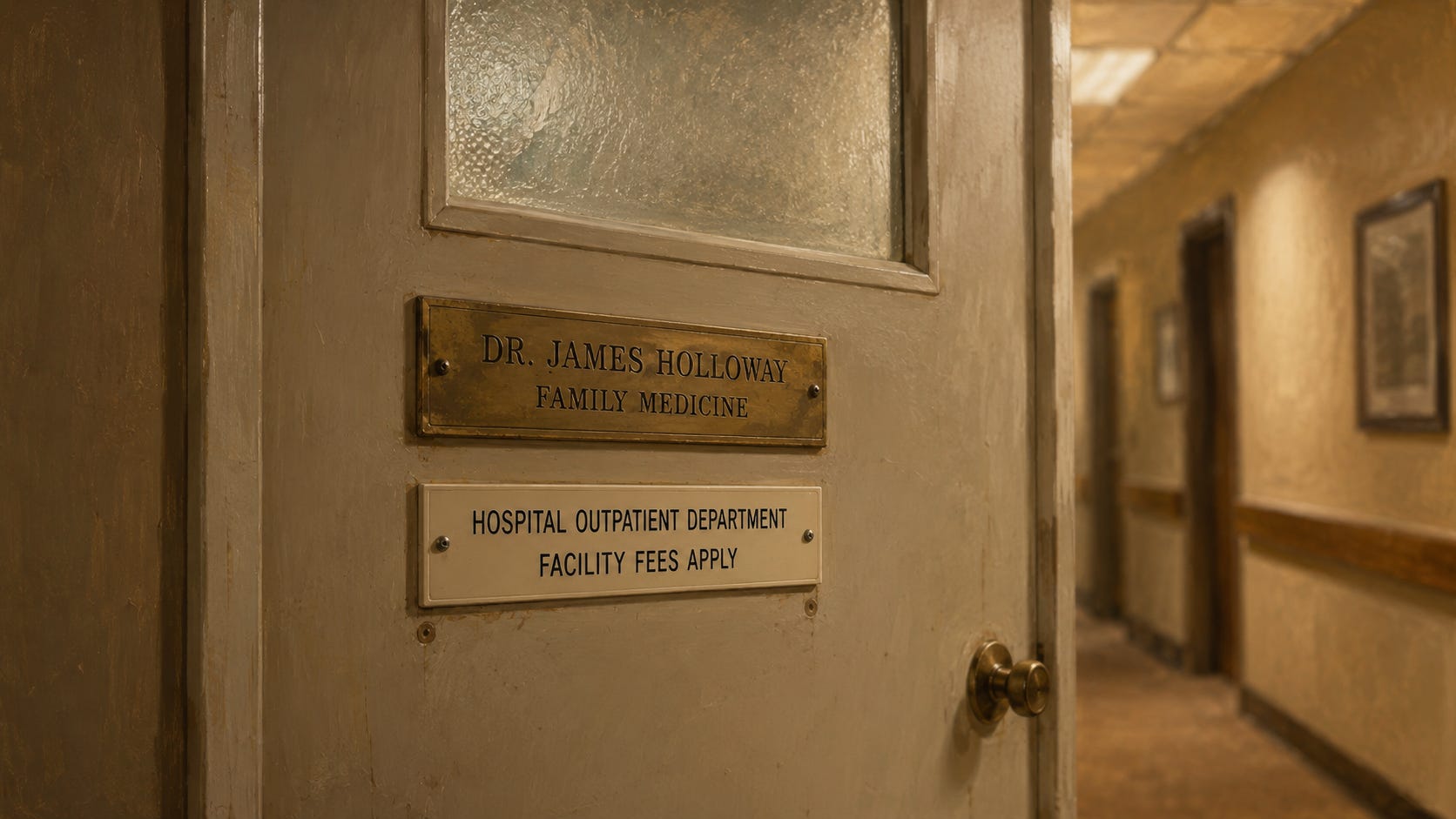
Your doctor’s practice got bought by a hospital system. The building, the staff, the equipment, the doctor, all of it stayed. What changed was a billing classification. Your doctor now works in what gets called a hospital outpatient department, and that category bills for the room on top of the visit. The room you were already sitting in. The room that did not change.
This has been running for over a decade, and it is most of the map now. As of January 2026, hospitals and other corporate owners hold 63.9 percent of physician practices in the country, leaving barely a third still owned by the doctors who work in them. (Physicians Advocacy Institute and Avalere Health, 2026) Every acquisition is a business deal. It is also a billing event, and the patients never sign off on it.
The fee is legal, and it was disclosed, technically, in the packet you signed when the new owners took over, somewhere between the insurance-card copy and the emergency contact. You did not read it. Almost nobody does. The disclosure is there to satisfy the rule, nothing more.
The money is not small. The Health Care Cost Institute ran the commercial claims and found the same primary care visit costs about 87 percent more once it bills as a hospital outpatient department, $217 against $116, and the gap is almost all facility fee. (Health Care Cost Institute, 2022 commercial claims) Same doctor, same forty minutes, same prescription at the end. The only thing that moved was the code.
It does not hit every visit, only the ones where your office quietly turned into a hospital outpatient department, and you find out which ones after the fact.
Whether your insurance even covers the fee is its own coin flip. Some plans treat it like any visit. Some drop it on a separate deductible. The only way to know before you walk in is to call the plan, read them the billing codes, and ask.
The acquisitions did not happen to improve your care. They happened because hospital billing pays more than office billing for the identical service. The facility fee is the reason the deal pencils out.
Even Mark Cuban, whose whole healthcare pitch is showing people what care actually costs, has called facility fees one of the games, the charge that shows up for the room when nothing about the room changed.
There is a fix, and it is not a mystery. Site-neutral payment, the same price for the same service no matter what the building is called. Medicare adopted a version, then exempted most existing hospital outpatient departments so it barely bit. Twenty states have passed their own facility-fee laws. Federal bills keep getting introduced and keep not passing, with the hospital lobby fighting every round. The fix is sitting right there. The people collecting the fee are the ones standing on it.
If you got a bill lately with a charge you did not recognize, and it said hospital when you never went to one, that is the machine. The episode runs it all the way down: where the fee comes from, who collects it, and what the gap between the promise and the receipt looks like in full.
This is the symptom. The episode is the diagnosis.
Watch the episode:
THE RANTER follows the money through the systems that bill you: healthcare, housing, food, labor, debt. Mechanism over motive.
Website: theranter.com | Newsletter: newsletter.theranter.com
YouTube: @TheRanterOfficial | Instagram: @theranterofficial | TikTok: @theranterofficial | X: @RanterMarkus | Bluesky: @rantermarkus.bsky.social
Every figure above is sourced and linked. Think one is wrong? corrections@theranter.com