

Highmark Benefits Group wrote a number into its 2026 rate filing in Pennsylvania and, I’ll give them this, named it in plain English. “Morbidity Impact from Expiration of Enhanced Premium Subsidies.” A factor of 1.040. Translate that out of insurance speak: a four percent surcharge tacked onto your premium that buys you not one minute of care. It sits inside a filing asking for a 17.93 percent average increase.
The surcharge pays for other people leaving. Highmark is charging the ones who stay, in advance, to cover the ones it expects to lose. Highmark did not invent it. CMS told 2026 insurers to assume the subsidies expire and price that in, required in states without their own rate-review program and encouraged everywhere else. Across the market, that assumption added about four points to 2026 premiums, on top of a roughly 26 percent average increase.
The name for this is adverse selection, the oldest engine in the building. The healthiest leave, the pool left behind is older and sicker and costs more, the insurer raises the price on everyone still holding a policy, and the next-healthiest head for the door. The money owed for the people who left does not evaporate. It lands on whoever is still standing, including the off-exchange buyer who never qualified for a subsidy and never shows up in a coverage-loss story.
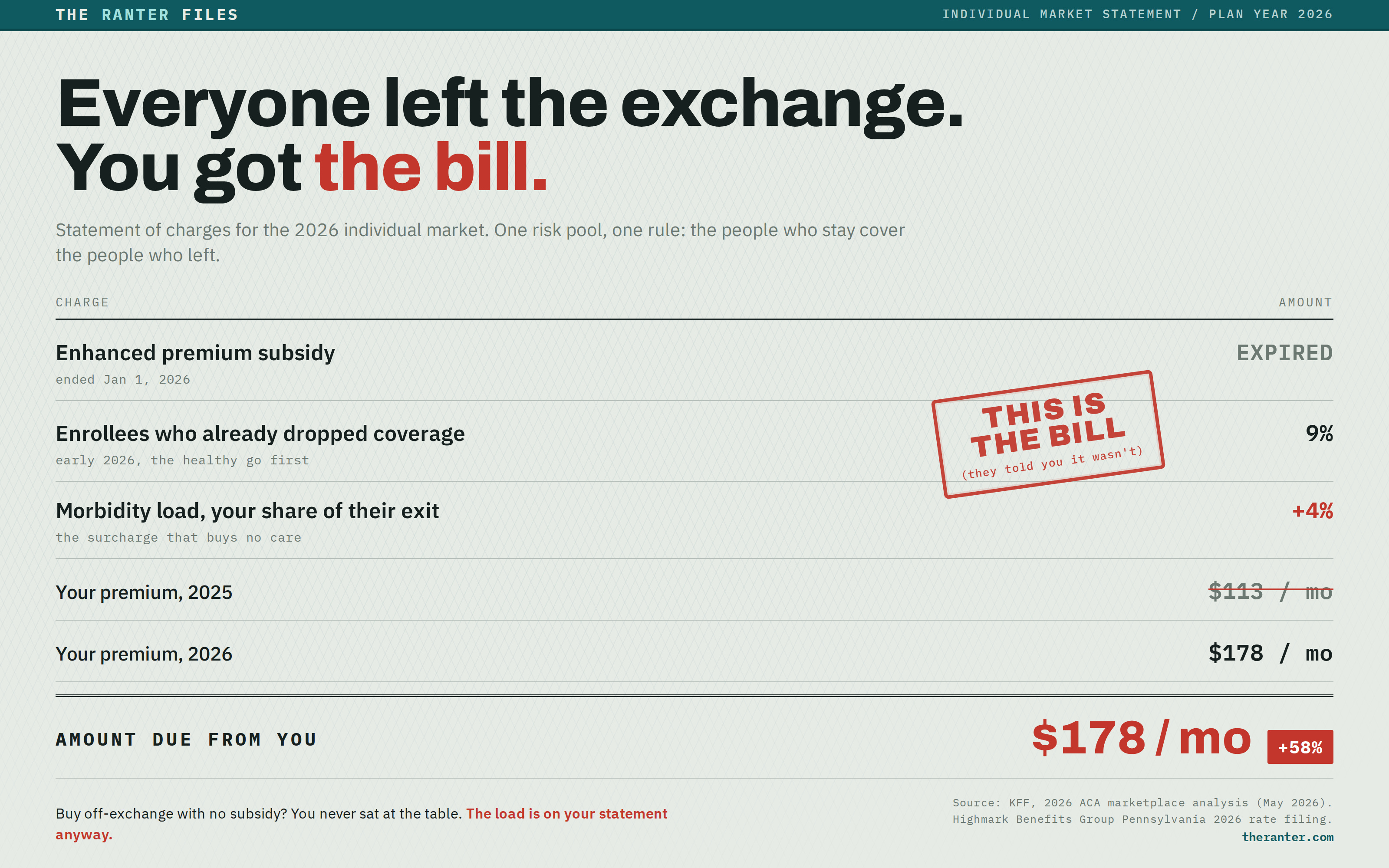
I buy mine off the exchange. Same load printed on my renewal letter, and I never had a subsidy to lose. I am paying for an exit I had no part in.
KFF found what enrollees actually paid: net premiums up 58 percent, from $113 a month to $178. That is under the doubling the early models warned about, and the smaller number is the worse news. It came in low because people ate the increase by dropping to thinner bronze plans or leaving entirely, and by early spring 9 percent of last year’s enrollees were already uninsured.
The second bill waits a year and goes off at a desk in April. The One Big Beautiful Bill Act, now Public Law 119-21, struck the cap on paying back excess premium credits, effective for tax year 2026. The old rule limited what you owed if you underestimated your income and took too much subsidy up front. Starting with the coverage you hold right now, that limit is gone, and the uncapped payback now reaches down to incomes it used to spare. A bonus or a strong freelance quarter that pushes your real income past your estimate can mean repaying the whole overage when you file in 2027, with no ceiling to catch you. And if that income crosses 400 percent of the poverty line, the enhanced credit that used to follow you above that line has expired, so you lose the subsidy outright and owe all of it back.
Here is why it keeps happening, and why it does not belong to one team. Making the enhanced credit permanent scored at $350 billion over a decade, so Congress wrote it with a sunset, which kept that number off the official books. Too expensive to admit to, so they put it on a timer and nobody had to sign for the result. Fine. That is fine. Then on December 11, both parties’ fixes died the same afternoon by the same count. The Democratic three-year extension failed 51 to 48. The Republican plan to swap the subsidy for health savings accounts failed 51 to 48. The House had passed a three-year extension in January, 230 to 196, with seventeen Republicans crossing, and the Senate took the papers and set them down. The bipartisan Collins-Moreno compromise is a press release, not a law.
The claim that the surcharge is pure profit is contested. The medical-loss-ratio rule makes individual-market insurers spend at least 80 percent of premium dollars on care or rebate the difference, so a load matching a sicker pool is not pure profit. Read the same rule the other way, though. The share the insurer keeps is a percentage, not a fixed sum, so every dollar the premium climbs lifts the dollar value of that cut. The cap written to limit the take quietly hands the industry a stake in a bigger bill. And the fraud the other side points to did happen: CMS pulled roughly 1.5 million ineligible or unauthorized enrollments off HealthCare.gov last year. That is a real oversight problem, and a different lever than letting the whole subsidy lapse and surcharging the people who stayed.
Two things you can do this week. First, find your state’s 2026 rate filing, public on your insurance department’s site or through the SERFF system, and look for the morbidity or subsidy-expiration load. If you buy off-exchange with no subsidy, you are paying a surcharge for an exit you had no part in, and the rate-review comment window is where you say that on the record. Second, if you take advance credits, keep your 2026 income estimate honest and watch the 400 percent line, because the cap that used to soften a bad estimate is gone, and crossing 400 percent now means losing the subsidy outright.
You are holding the bill for the people who walked. Go find the line in your own filing, and say so on the record while the window is open.
Related read: The Bill You Never See
THE RANTER follows the money through the systems that bill you: healthcare, housing, food, labor, debt, political money. Mechanism over motive.
Newsletter: newsletter.theranter.com | Website: theranter.com
YouTube: @TheRanterOfficial | Instagram: @theranterofficial | TikTok: @theranterofficial | X: @RanterMarkus | Bluesky: @rantermarkus.bsky.social
Every figure above is sourced and linked. Think one is wrong? corrections@theranter.com